ZhongZe
China RotoMolds & OEM
Get a Quote
ZhongZe
China Roto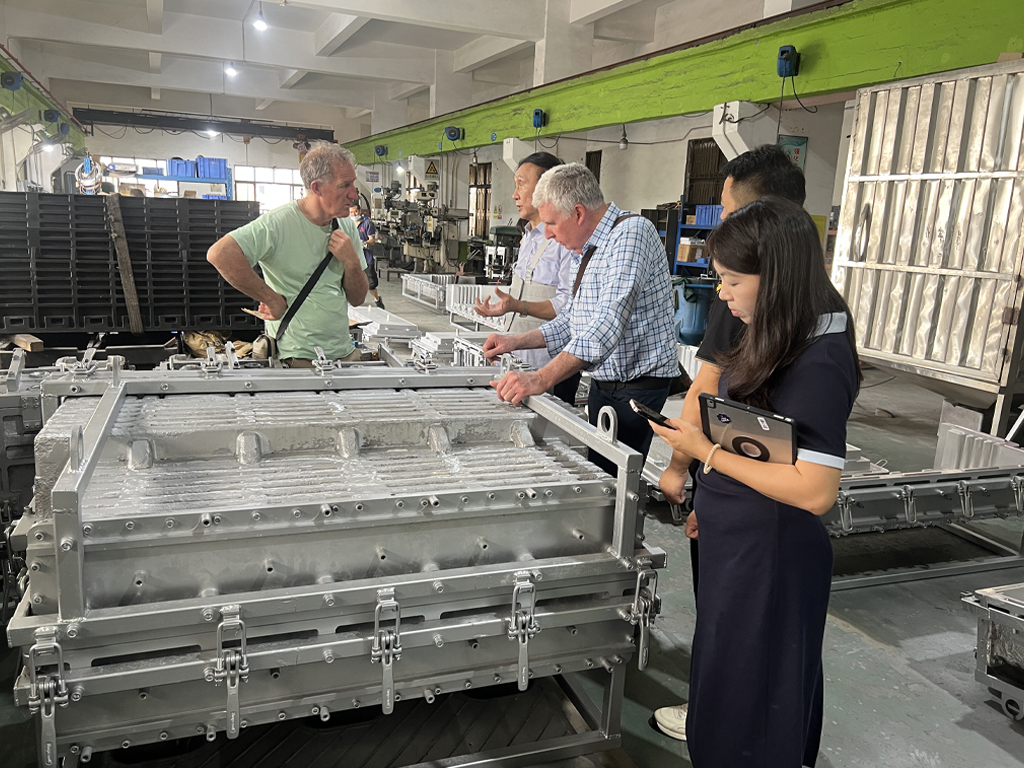
Before a custom rotomolding mold is manufactured, the product design and production requirements need to be reviewed from a molding perspective. Product geometry, material, mold construction, demolding, and process requirements are closely related. Identifying potential issues early can reduce unnecessary mold changes and trial adjustments later.
The 3D product model is the starting point for mold development. The review should go beyond overall dimensions and consider features that may affect molding, material distribution, mold construction, or demolding.
Particular attention should be given to:
These features can influence how the mold is constructed and how material moves and builds on the mold surface during the molding cycle.
Not every area of a rotomolded part has the same functional requirements. Before mold manufacturing, identify the areas that are critical to the product’s function.
Mounting points, sealing interfaces, connection areas, structural sections, and other functional features may require closer control of dimensions, wall thickness, or material distribution.
For rotomolded parts, it is generally more practical to define required wall thickness ranges and critical areas rather than expect identical thickness throughout the entire part. The actual result should be verified during trial production.
Material selection should be based on the product’s application and required performance, such as impact resistance, chemical exposure, temperature, UV exposure, flexibility, or structural requirements.
The material charge should also be established as part of the production requirements. The amount of material has a direct effect on the overall part weight and average wall thickness. However, local material distribution is also affected by product geometry, mold design, heating, and mold rotation.
Production volume and expected cycle requirements should be considered at the same time. These factors can influence the appropriate mold construction and the practical production approach.
The mold construction method should be selected according to the product geometry, mold size, surface requirements, production requirements, and expected mold life. Common mold types include cast aluminum, CNC machined aluminum, and fabricated steel molds. The mold development approach should be evaluated together with the product geometry and production requirements before manufacturing begins.
Parting line design should also be reviewed before the mold structure is finalized. Its position can affect mold construction, flash location, product appearance, functional areas, and demolding.
Deep sections, undercuts, narrow openings, and other restricted geometries may require additional consideration to ensure that the finished part can be removed from the mold without damaging the product or interfering with the mold structure.
Trial production is an important part of a custom rotomolding project. It provides the opportunity to evaluate the actual molded part rather than relying only on the product model and mold design. Examples of completed rotomolding projects can also help illustrate how mold design translates into actual production results.
Depending on the product, trial production may be used to verify:
If adjustments are required, the material charge, heating and rotation conditions, cooling conditions, or other process parameters can be reviewed based on the trial results.
A custom rotomolding project should be reviewed as a combination of product design, mold design, material, and molding process rather than as mold manufacturing alone.
A practical sequence is:
Review the product → develop the mold → conduct trial production → verify the molded part → move into regular production.
Early engineering review does not replace trial production. Its purpose is to identify potential molding issues before the mold is manufactured and to establish a clearer basis for the subsequent mold and production work.
Rotational molding mold and OEM manufacturing insights, covering mold development, materials, design and production.
Need a custom mold, OEM production, or an electric kart boat? Share your project details with us. Our team will review your requirements and get back to you promptly.
No drawings yet? We can help review your idea and recommend the right approach.