ZhongZe
China RotoMolds & OEM
Get a Quote
ZhongZe
China Roto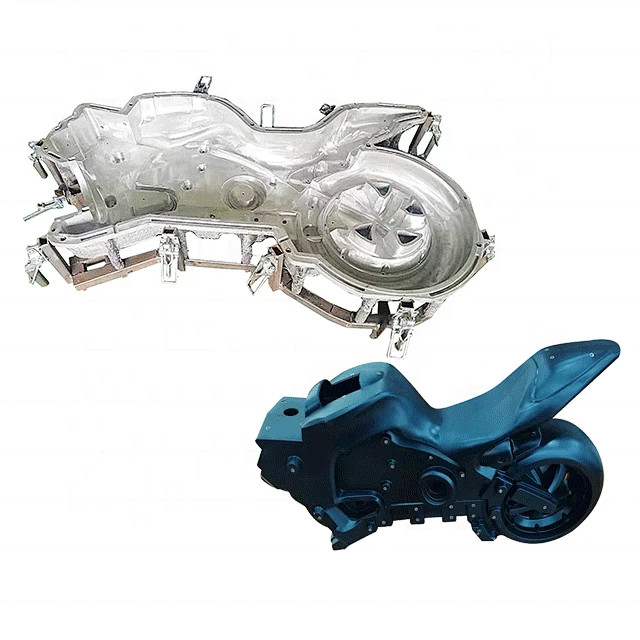
Choosing the right mold is one of the first engineering decisions in a rotational molding project.
From a factory engineer’s perspective, the choice is not simply about mold price or material. We normally look at the product geometry, production volume, surface requirements, mold size, and expected service life before deciding how the mold should be manufactured.
For most custom rotational molding projects, the main options are cast aluminum molds, CNC machined aluminum molds, and fabricated steel molds.
Each has its own advantages.
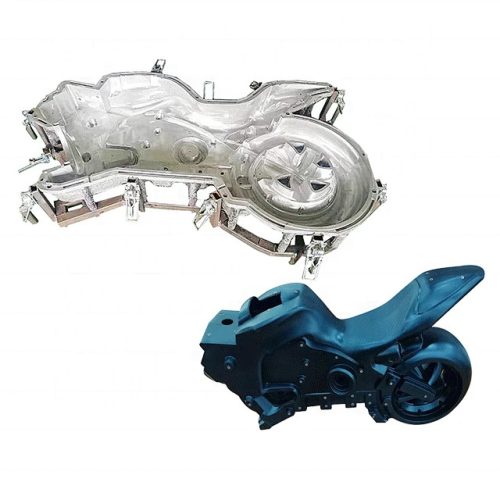
Cast aluminum is widely used for custom rotational molding because it provides a good balance between mold cost, thermal performance, and geometric flexibility.
It works particularly well for medium to large products with curved or relatively complex surfaces.
Typical applications include:
Cast aluminum is also suitable when the mold needs good heat transfer but direct CNC machining would make the tooling too expensive.
One important point is that a cast mold is not simply finished after casting. Critical areas such as the parting line, mounting surfaces, and functional features still require machining and finishing.
A CNC machined aluminum mold is manufactured directly from an aluminum block using CNC machining.
This method provides excellent control over the mold surface and is particularly useful for products with detailed or complicated geometry.
We normally consider CNC aluminum when the project requires:
The main limitation is manufacturing cost.
For a large mold with a relatively simple shape, machining the entire mold from aluminum may not be the most economical solution. In those cases, cast aluminum or fabricated steel can make more sense.
Fabricated steel molds are constructed from steel plate and other fabricated components rather than being cast or fully machined.
For large products with relatively simple geometry, steel can be a cost-effective tooling option.
It is often considered for:
Steel provides good structural rigidity, but its thermal behavior is different from aluminum. Therefore, mold construction and the expected heating and cooling process need to be evaluated together.
A lower tooling price does not necessarily mean a lower overall production cost.
For more information about our custom mold development process and available mold manufacturing options, see our Rotomolding Mold Development page.
There is no universal answer.
| Requirement | Recommended Option |
|---|---|
| Medium/large complex product | Cast aluminum |
| Detailed or precision geometry | CNC machined aluminum |
| Large and relatively simple product | Fabricated steel |
| High-quality surface details | CNC aluminum |
| Balanced tooling cost and performance | Cast aluminum |
| Large tooling with cost sensitivity | Fabricated steel |
This table is only a starting point.
The actual decision should be based on the product’s 3D model and production requirements.
For example, a large tank may look simple from the outside, but internal ribs, mounting bosses, deep areas, and the required parting line can significantly affect the mold construction.
Before manufacturing a custom rotomolding mold, we normally review several key areas.
We check corners, ribs, bosses, handles, recesses, and other features that may affect molding or demolding.
The parting line needs to support practical mold assembly, demolding, and flash control.
Although the amount of resin primarily determines average wall thickness, product geometry and process conditions influence thickness distribution. Potential problem areas should therefore be considered during mold design.
Proper venting is necessary for air and gases to escape during the molding cycle while avoiding unnecessary defects.
Large molds need sufficient rigidity and reliable clamping to maintain alignment during rotation and thermal cycling.
Expected production volume, cycle time, product changes, and mold service life can all influence the most suitable mold construction.
The cheapest mold is not always the most economical mold.
A tooling quotation should be evaluated together with the expected production process.
A lower-cost mold may result in longer cycles, more trimming, difficult demolding, or additional modifications after the first trial.
For a short production run, a cost-effective fabricated steel mold may be completely reasonable.
For a long-term production program, investing more in aluminum tooling may provide better overall value.
The right question is therefore not:
“Which mold is the cheapest?”
It is:
“Which mold construction is appropriate for this product and its production requirements?”
From an engineering perspective, rotomolding mold selection should start with the product, not the mold material.
Cast aluminum, CNC machined aluminum, and fabricated steel can all be good choices when they are matched to the right application.
Before starting a custom mold project, it is useful to evaluate:
A review of the 3D model at the beginning of the project can often identify potential tooling problems before manufacturing starts.
If you are developing a new rotationally molded product, sharing the product drawing or 3D model with the mold engineer early in the process can help determine the most practical rotomolding mold design and manufacturing method.
Have a new project in development? Contact our engineering team to discuss your mold requirements.

Rotational molding mold and OEM manufacturing insights, covering mold development, materials, design and production.
Explore our mold development and OEM manufacturing capabilities.
Need a custom mold, OEM production, or an electric kart boat? Share your project details with us. Our team will review your requirements and get back to you promptly.
No drawings yet? We can help review your idea and recommend the right approach.