
ZhongZe
China RotoMolds & OEM
Get a Quote
ZhongZe
China Roto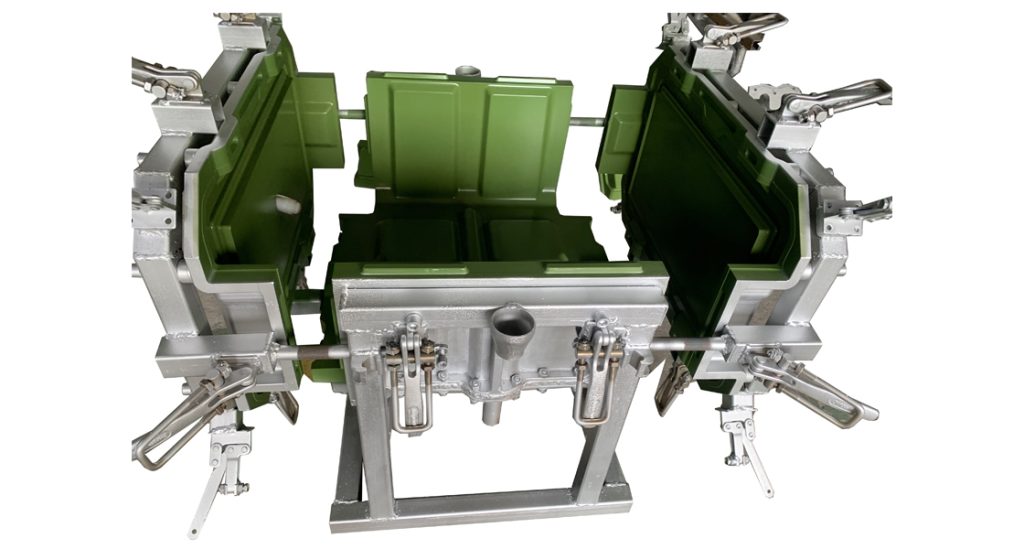
The quality of a rotational molding mold has a direct impact on the final product appearance, dimensional accuracy, structural performance, and production efficiency.
Poor mold quality or improper process control may result in:
However, mold quality is not determined by the mold itself alone. It is the result of the interaction between mold design, mold material, rotational molding equipment, heating control, and cooling process.
Understanding these factors helps manufacturers achieve more stable and reliable rotomolding production.
The mold is the foundation of the rotational molding process.
A well-designed mold can improve:
Important mold design considerations include:
Complex structures, deep cavities, and uneven sections require optimized mold design to ensure proper material flow and heat distribution.
A properly designed parting line helps reduce visible marks, improve product appearance, and make demolding easier.
Effective venting prevents trapped air, bubbles, and incomplete fusion during molding.
Poor mold design may lead to inconsistent product quality even when other production parameters are properly controlled.
The mold material has a significant influence on heat transfer, cooling speed, and product performance.
Common rotomolding mold materials include aluminum and steel.
Aluminum molds are widely used because of:
The slower and more uniform cooling characteristics of aluminum molds can help reduce temperature differences inside the product.
Steel molds provide:
However, heat transfer characteristics are different from aluminum molds and may require optimized process parameters.
Choosing the right mold material according to product requirements is essential for achieving stable production results.
Temperature control is one of the most important factors affecting rotomolding quality.
During production, the plastic material must:
Incorrect heating conditions may cause:
Professional manufacturers optimize heating curves according to:
Cooling is a critical stage that affects both product quality and production efficiency.
The cooling process influences:
If cooling is too fast:
If cooling is too slow:
A balanced cooling strategy is required to achieve both product stability and manufacturing efficiency.
Many rotomolding applications use a combination of air cooling and water spray cooling to achieve better results.
Rotational molding equipment also plays an important role in determining product quality.
High-quality equipment allows accurate control of:
For large and complex products, equipment capacity directly affects:
A properly matched machine and mold system helps manufacturers produce consistent products over long production runs.
The cooling rate during rotational molding affects the internal structure and mechanical properties of polyethylene products.
Different cooling methods can influence:
Therefore, cooling parameters should be optimized based on:
For industrial products requiring long service life, controlling the cooling process is essential to achieving the right balance between strength, durability, and dimensional stability.
The quality of rotomolded products is not determined by the mold alone.
It depends on the complete manufacturing system, including:
A professional rotomolding manufacturer must optimize these factors together to achieve reliable product quality, stable production efficiency, and long-term performance.
For companies developing custom rotomolded products, choosing a supplier with strong mold development expertise and manufacturing experience is the key to achieving successful results.

Explore our mold development and OEM manufacturing capabilities.
Need a custom mold, OEM production, or an electric kart boat? Share your project details with us. Our team will review your requirements and get back to you promptly.
No drawings yet? We can help review your idea and recommend the right approach.